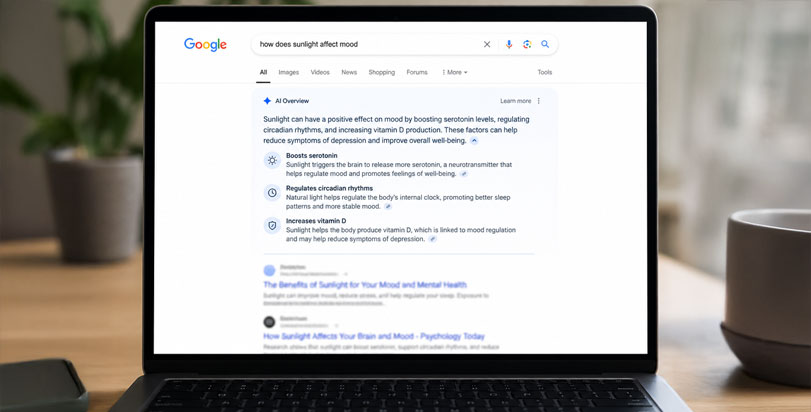
The way people search online is changing fast. Google AI Overviews make an appearance in one out of every four search results. Getting them to cite, reference, and recommend your website when searchers ask questions relevant to your business or brand can put you leagues ahead of your competitors.
In this post, we bring you five practical ways to optimize your website for Google AI Overviews.
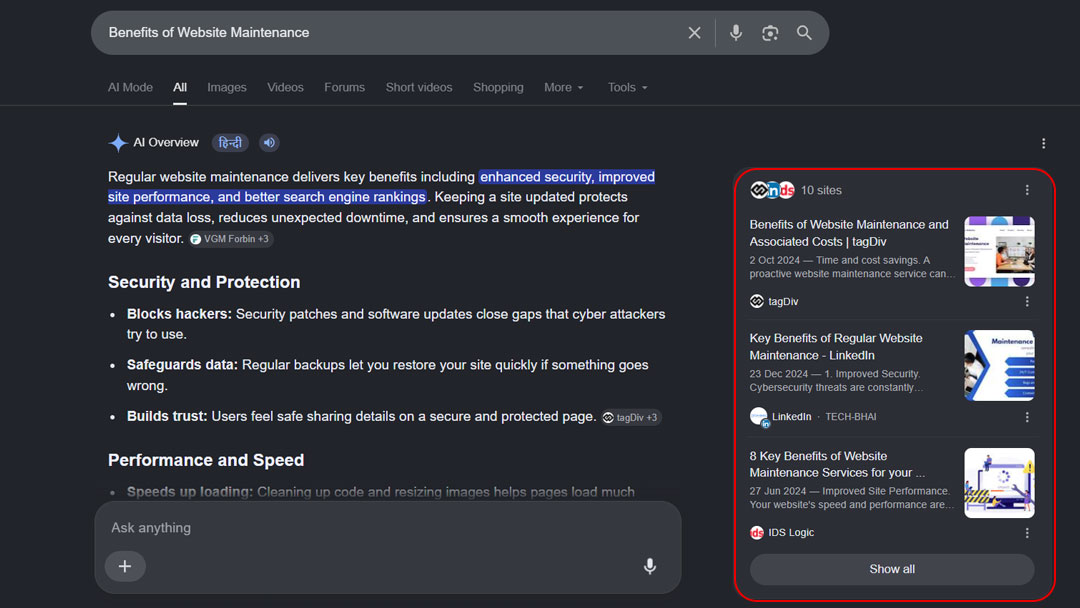
1. Answer Questions Directly
Google’s AI search is designed to answer users’ questions as quickly as possible. If your content has been burying the answer several paragraphs down, change it now. Lead with a concise, straightforward, and standalone answer (typically in 1 to 3 sentences, within the first 40-60 words) at the top of the page or section before expanding on the topic.
Use clear question headings (H2/H3 and so on) that match natural language queries and long‑tail keyword variants. For example, replace a vague heading like “Benefits of Website Maintenance”with“Why Is Website Maintenance Important?”Answer the question immediatelybefore diving into the details.
Google’s generative AI search relies heavily on Retrieval-Augmented Generation (RAG), which means it fetches relevant facts from external data sources before generating an answer. By giving clear, extractable answers to user questions, you can improve your web page’s chances of being used as a source. Clear, extractable answers make it easier for AI systems to understand and reference your content.
You can make your answer stronger with supporting evidence, such as one or two short bullets with reliable and recent sources or data. Also, break complex topics into smaller, scannable segments. Don’t forget to include FAQ sections where they genuinely add value.
These simple, actionable steps can improve readability for your site visitors while making it easier for AI systems to understand and reference your content.
2. Add Experience and Expert Insights
Rehashing old content or writing generic content is of no use today, as the internet already has millions of them. What Google AI Overviews increasingly look for is content that offers something beyond generic information. That’s where your first-handexperience and expertise become a competitive advantage.
Instead of repeating what everyone else says, you can include in your content:
Original observations or data from your work.
Real case studies or client examples.
Practical lessons you’ve learned.
Common mistakes you’ve seen people make.
Industry-specific first-hand insights or recommendations backed by experience
For instance, if you’re writing about local SEO, go beyond the definition. Share a specific optimization that improved a client’s visibility or generated more qualified enquiries. You can even include brief, real‑world examples or one‑line anecdotes to make your content non‑commodity.
Google’s generative features favor materials grounded in practical experience, which means concise, experience‑based details that are more engaging and trustworthy win over a generic copy. This will also increase the probability of your pages being cited or referenced byGoogle’s AI search systems.
3. Improve Internal Linking
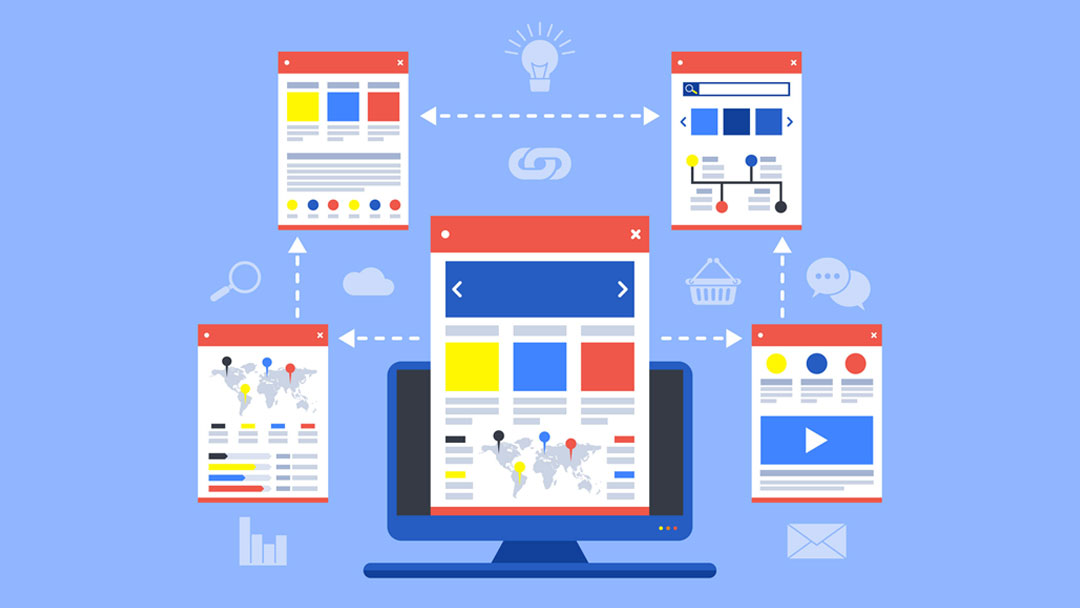
Internal linking is perhaps the most overlooked aspect of AI SEO. Yet, it’s the easiest to implement. Your website’s pages, articles, or blogs shouldn’t exist in isolation. Instead, they should connect naturally with other relevant pages that provide additional context.For example, a case study about improving a bakery’s local visibility can link to your keyword research article and your local SEO service page.
Building topic clusters is another effective internal linking strategy. Instead of publishing isolated articles, you can create 3-5 content pillars and then craft articles related to those core topics to demonstrate topical authority. A pillar page on “AI SEO” can link to detailed posts about AI Overviews, structured data, E-E-A-T (Experience, Expertise, Authoritativeness, and Trustworthiness), and content freshness.
Remember to use descriptive anchor text when linking internally togive search engines clearer context about the linked page. Replace generic terms like“click here,”with targeted anchorssuch as“AI search optimization strategies” or “Best practices to get cited in AI Overviews.”
When your site has a strong internal linking structure, it helps:
Search engines understand relationships between the linked pages.
Important pages get greater visibility.
Users discover more helpful resources.
Your website establish its topical authority.
4. Use Structured Data Where Appropriate
Structured data doesn’t directly improve rankings, but it helps search engines understand your content more accurately. The clearer Google is about what your web page contains, who created it, and how different pieces of information relate to each other, the better your chances of being considered as a reliable source for AI-generated responses.
You can use schema markups to provide additional context about your pages, making it easier for Google to interpret information. Implementing the right schema types like Organization, Person, Author, Article, and Web Page can help Google connect your business, your staff and authors (and their expertise), and the topics you regularly publish. This helps in AI search optimization.
A word of caution: Not every page needs every type of schema. You need to focus on markup that accurately reflects your content, such as:
FAQ Page
genuine FAQ sections
How To
instructional guides
Local Business
local companies
Article
blog posts
Product
product pages
Breadcrumb List
site navigation
5. Keep Content Fresh and Factually Accurate
Google’s AI systems prioritize information they consider up-to-date and reliable when generating answers. This makes it vital to keep your website content fresh and factually accurate, as it helps in AI search optimization.
For instance, if you had published a blog last year on SEO trends, updating it with the latest algorithm changes and current best practices makes it far more reliable than leaving it untouched.
Search intent, keywords, user questions, and industry terminology evolve constantly. This makes it crucial to refresh content to improve topical relevance and strengthen your E-E-A-T signals. You can do this by
Adding new sections (like client experiences, original observations, recent examples, or lessons learned) that answer emerging questions.
Including recent statistics and research.
Replacing outdated screen shots and correcting obsolete recommendations.
Updating expert opinions, product information, features, industry best practices, and case studies.
Adding new FAQs based on emerging search trends.
Fixing broken links.
Aligning your content with how people search today.
You don’t always need to rewrite an entire article. Even regular reviews followed by thoughtful updates that improve accuracy and usefulness signal that your content remains relevant and valuable in the age of AI-generated search.
Final Thoughts
Optimizing your website for Google AI Overviews doesn’t have to be complicated. Small, consistent improvements can go a long way. Focus on creating content that answers your audience’s questions clearly, draws on your real experience and expertise, connects related pages through thoughtful internal linking, uses structured data where it makes sense, and stays accurate as information evolves.
None of these strategies is a one-time fix. Keep refining your content, and you’ll not only improve your chances of being featured in Google AI Overviews but also build a stronger website that performs better in traditional search results.
Now, it’s your turn. Which of these strategies will you implement first?